2023
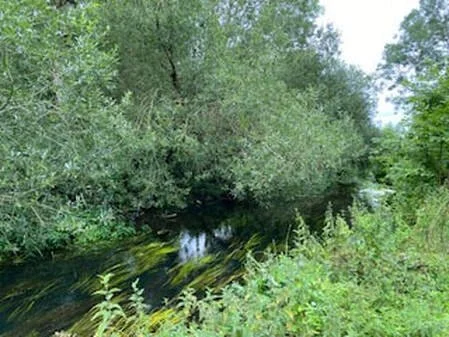
High water March 2023
Bank protection
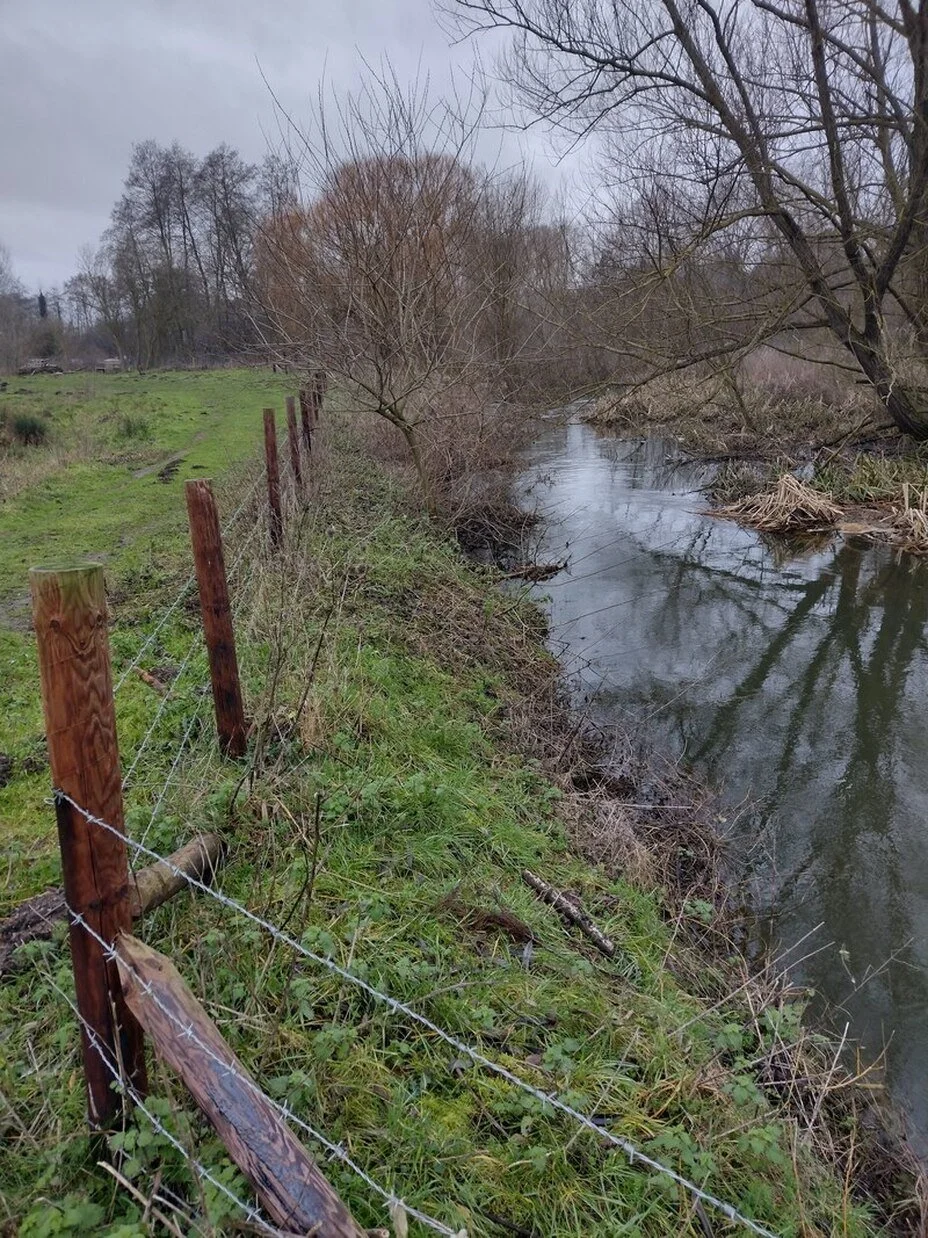
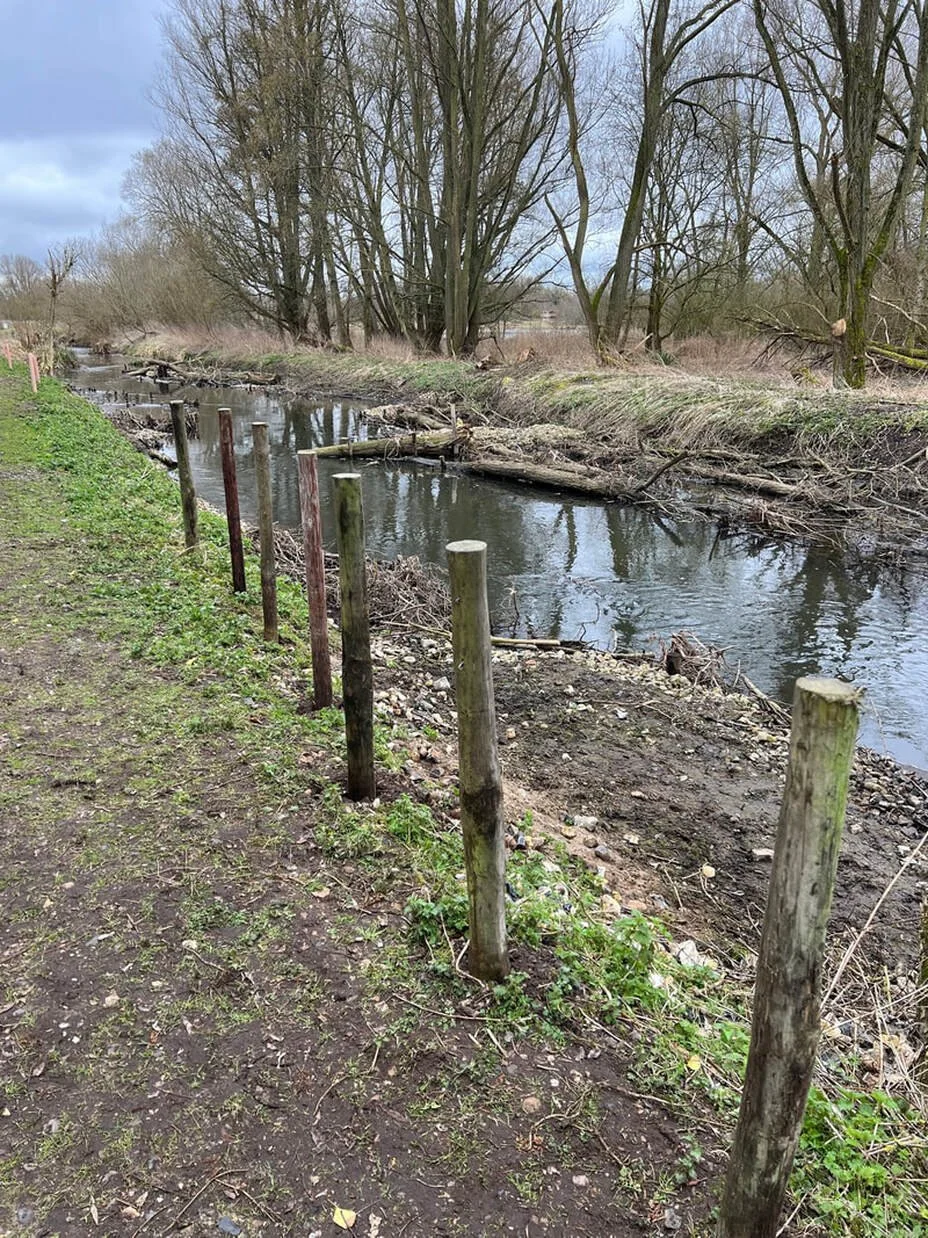
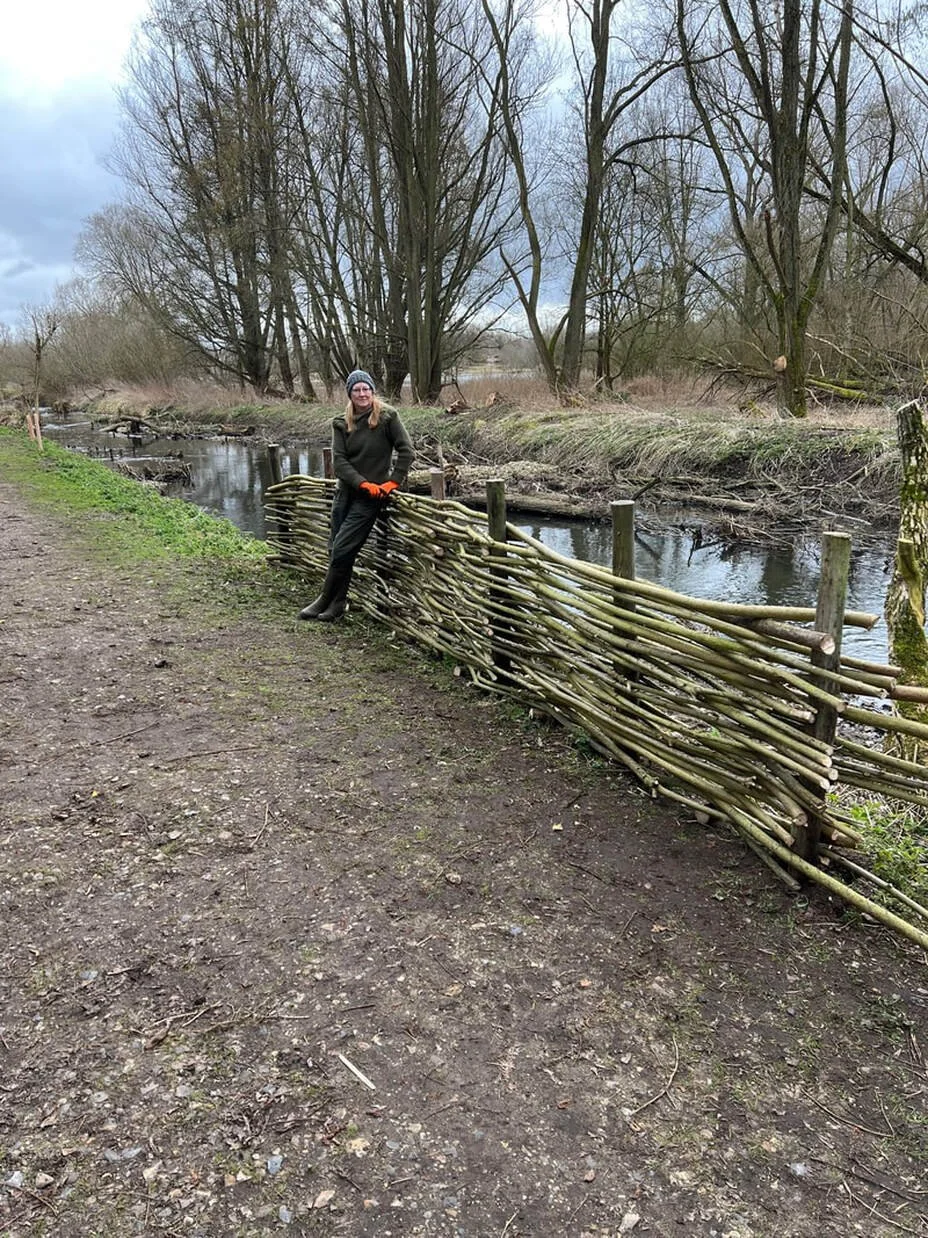
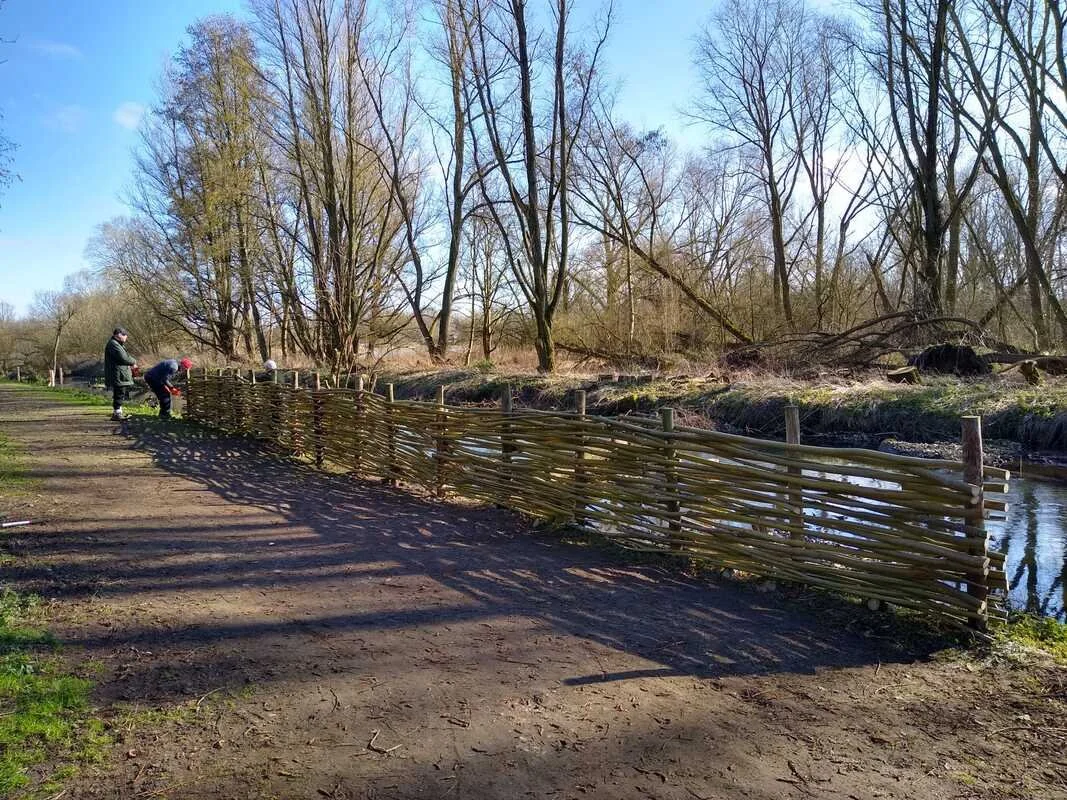
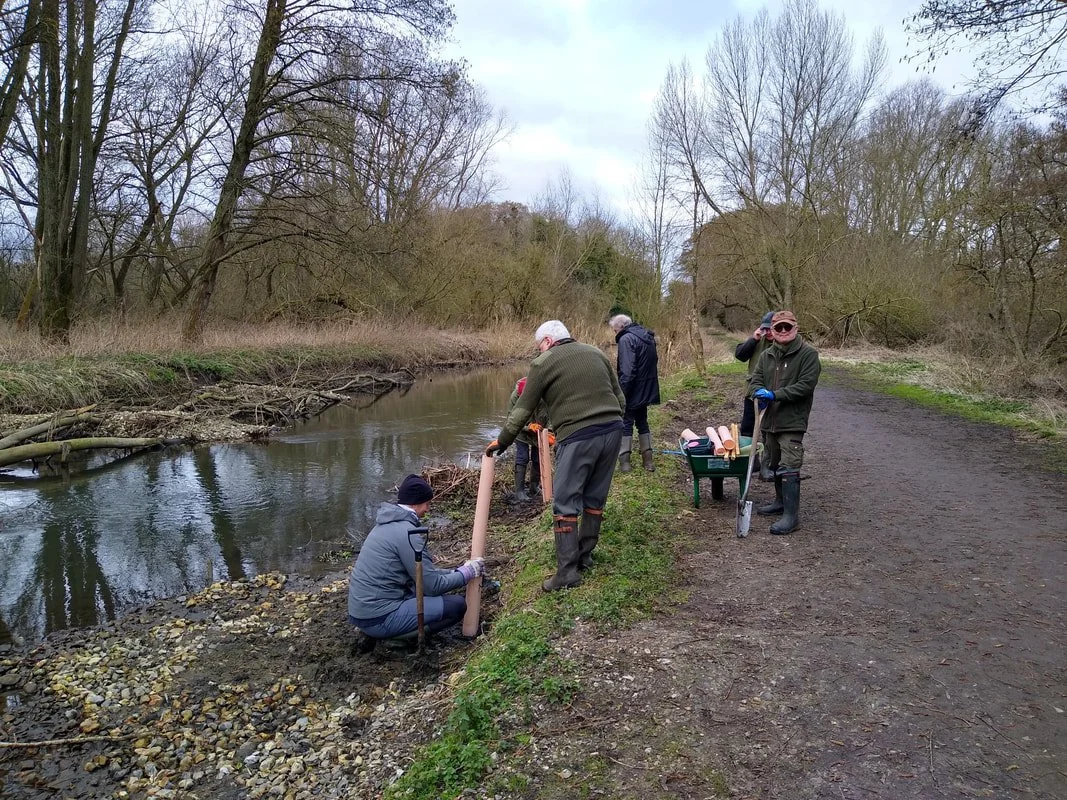
Restoration work was performed in Autumn 2022, which Kerry has named "Alder Reach". The bank needs protection from animals, dogs and walkers. Stakes were driven in at 1m intervals, and willow weaved in between to create a fence.
The time-lapse video shows volunteer Peter, and Kerry, doing the harvesting of willow for the fencing.
The willow we harvested is used to create a fence
Fallen willows
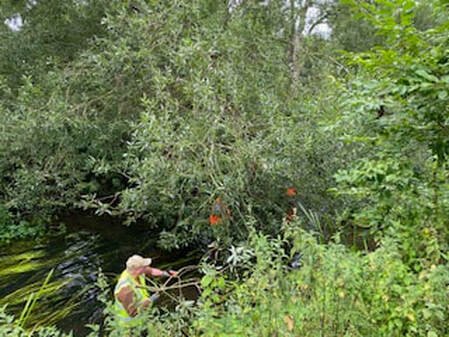
Nick Finch, Kerry Jordan, Tony Vivian and Glen Marsh spent a total of 10 man-hours removing two fallen willows which had been obstructing the river at Keeper's Cottage Corner. Willows left in this state will take root in the river bed.
The location, ironically, is "Willow Glide.” With thanks to Nick Finch for the photos.
Electrofishing, kick sampling and water quality: 4th May 2023
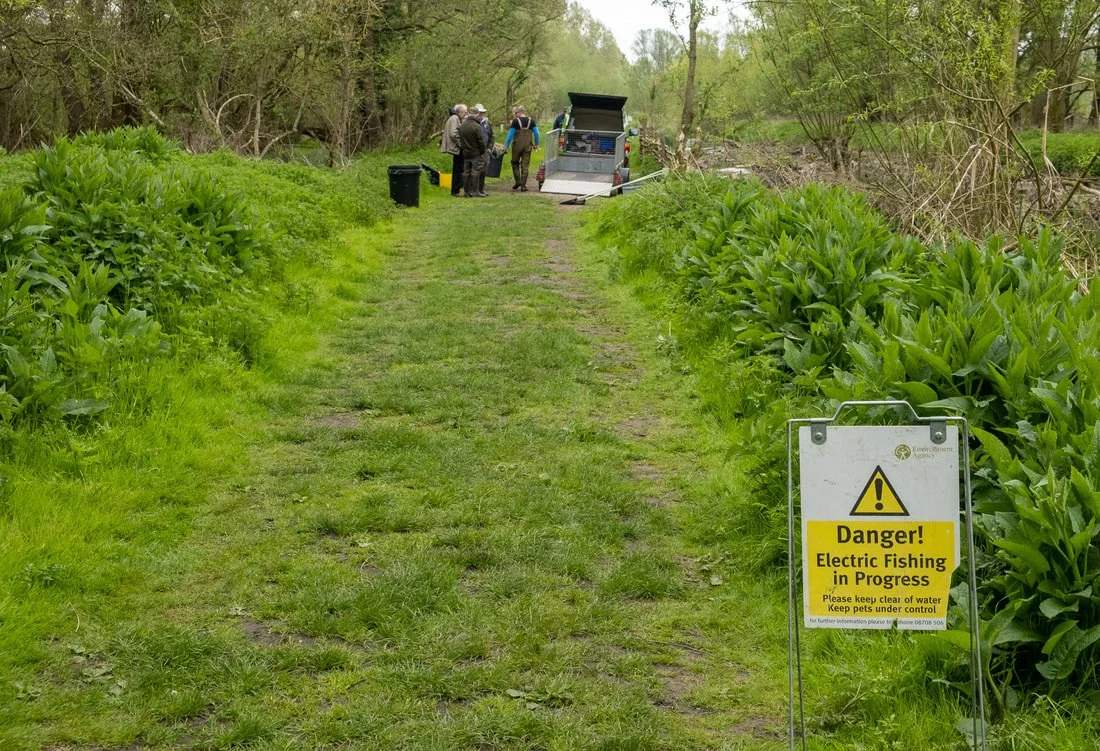
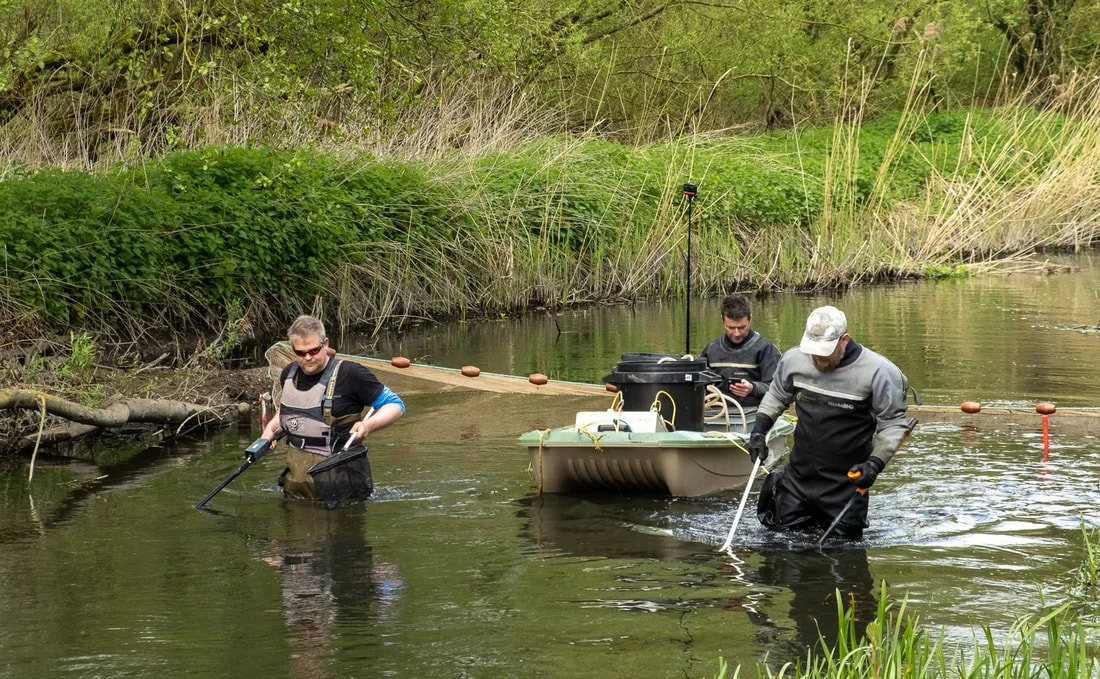
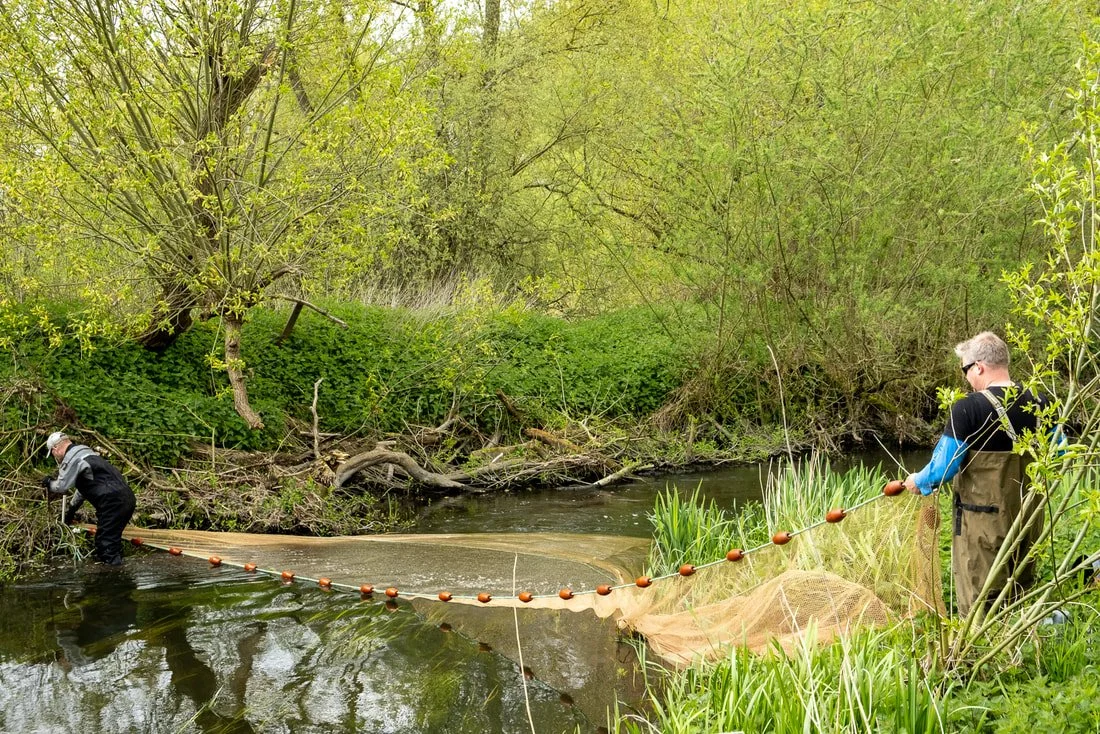
Our friends from the Environment Agency, led by Alex Malcolm, visited and performed electrofishing over 150m from Farm Pool to the downstream extent of the restoration work from last autumn.
The current stuns the fish (galvanotoxis) for just long enough to be captured in nets and transferred to a holding tank which is perfused with oxygen. Recovery is instantaneous. The boat is the cathode with the anodes held by hand. A pulsed Direct Current between 1 and 3 V/cm is used.
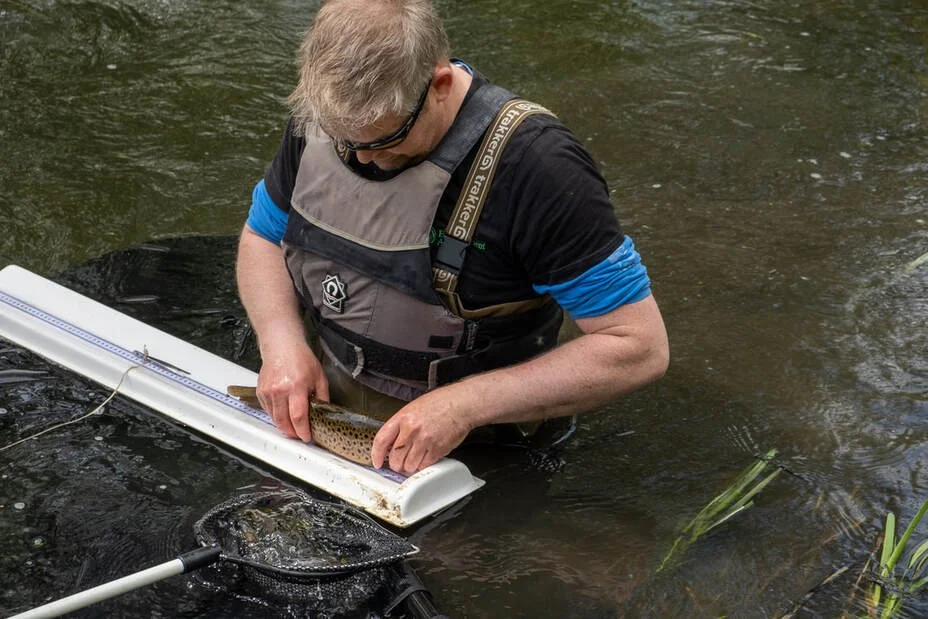
Fish are measured and counted, with scale samples taken from fish of interest for genetic analysis and age estimation.
Tree Planting
Volunteer Matt, John, Kerry, Keith, Glen and David planted a mixture of alder, hazel, hawthorn and dogwood along the bank of the river where the restoration work was performed in Autumn 2022
Bank repairs
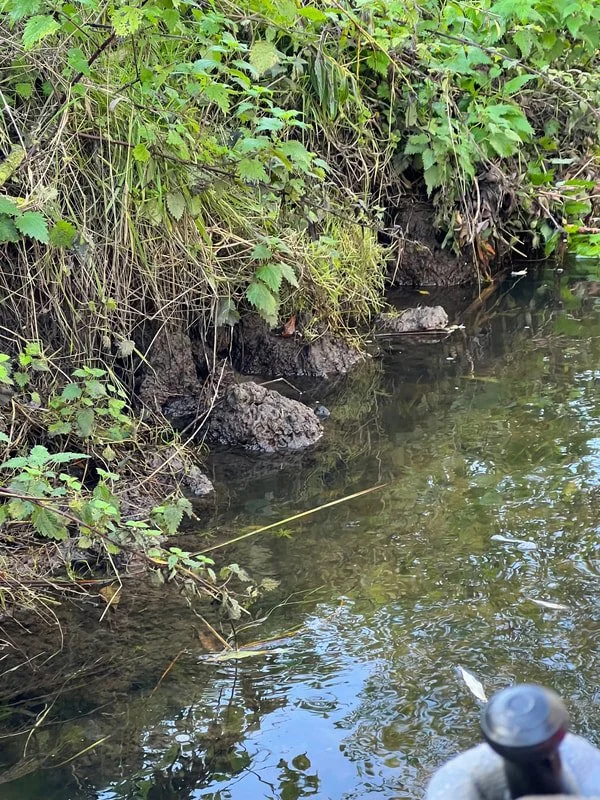
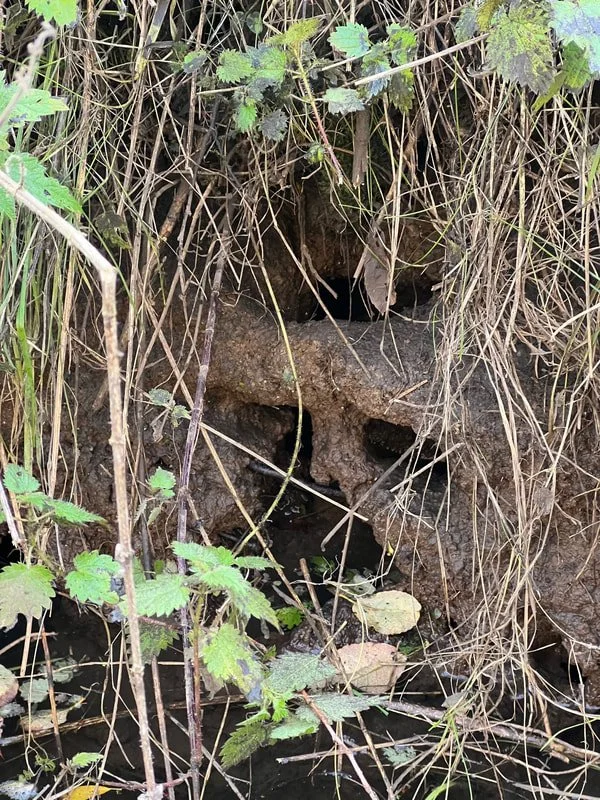
Crayfish have burrowed into and eroded the river bank in three locations causing us concern; two in West Stow Country Park, and one immediately adjacent to the track adjacent to the Coarse Lake, which had been repaired in 2014. There is further damage on the carrier stream upstream of the Dark Pool.
These images demonstrate what is known as a gallery of crayfish burrows which can be as much as 1m long; the damage is evident. Work is planned for 2024 and will involve 2m stakes securing alder trunks and brash bundles before backfilling.
Reed clearance
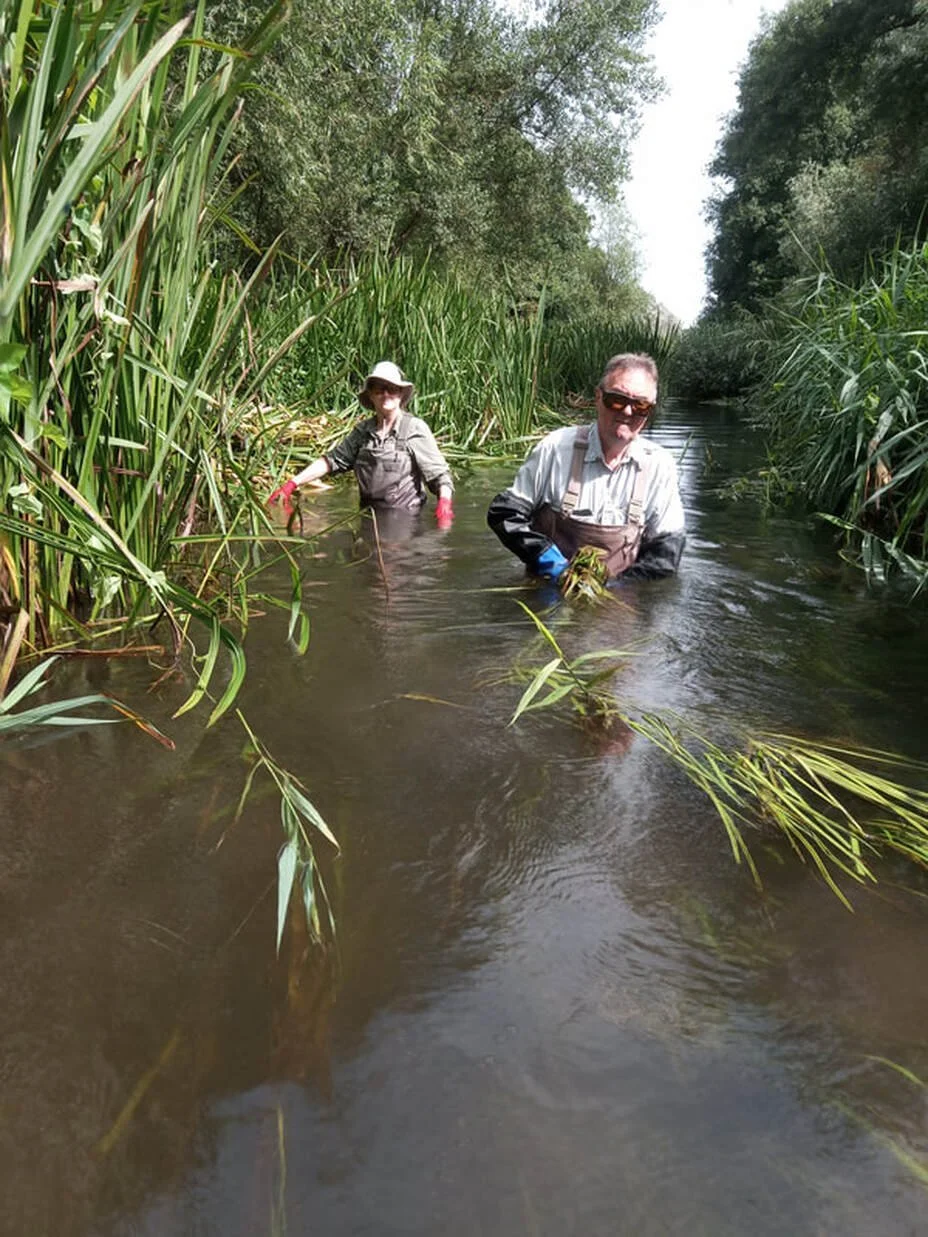
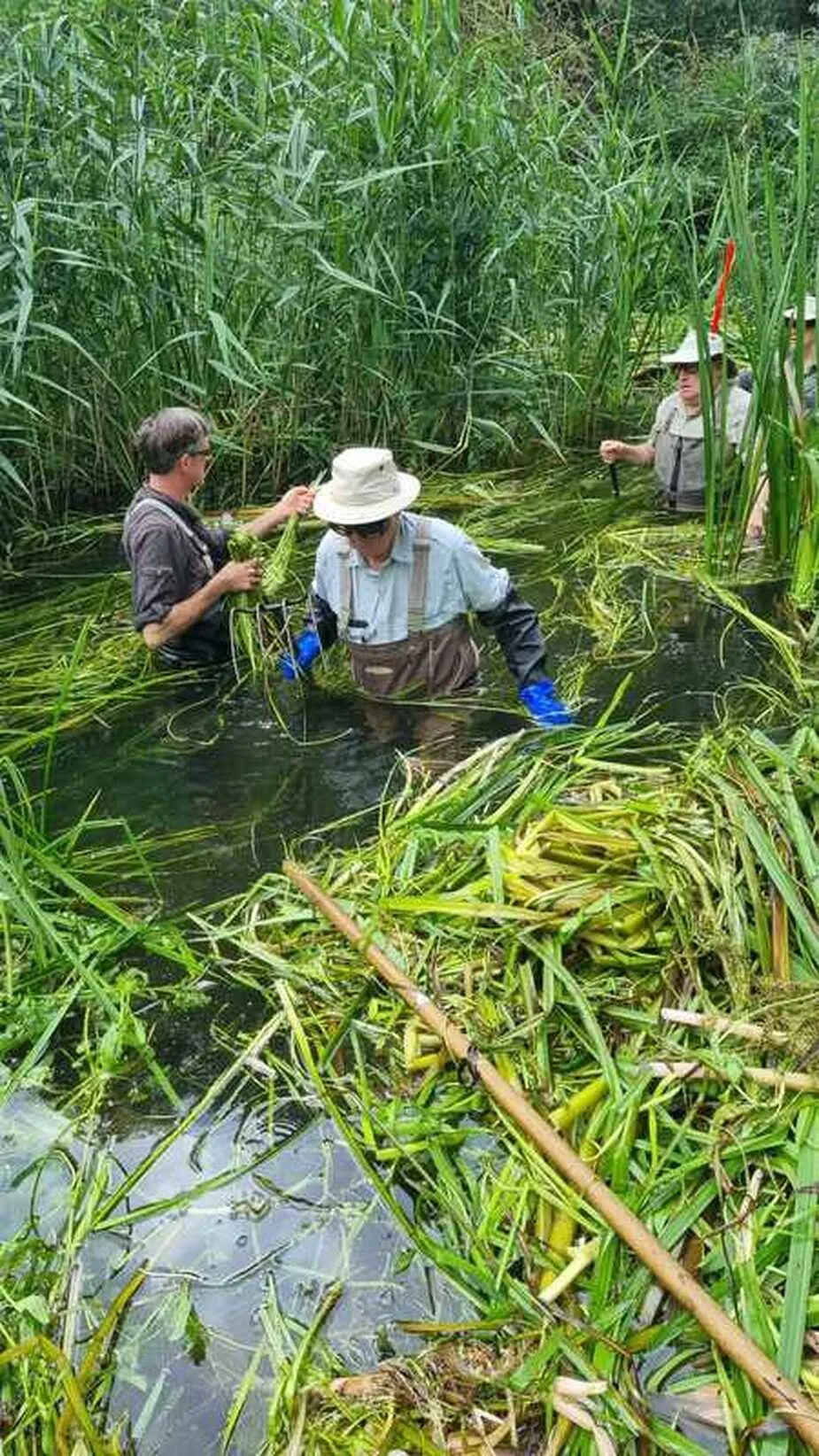
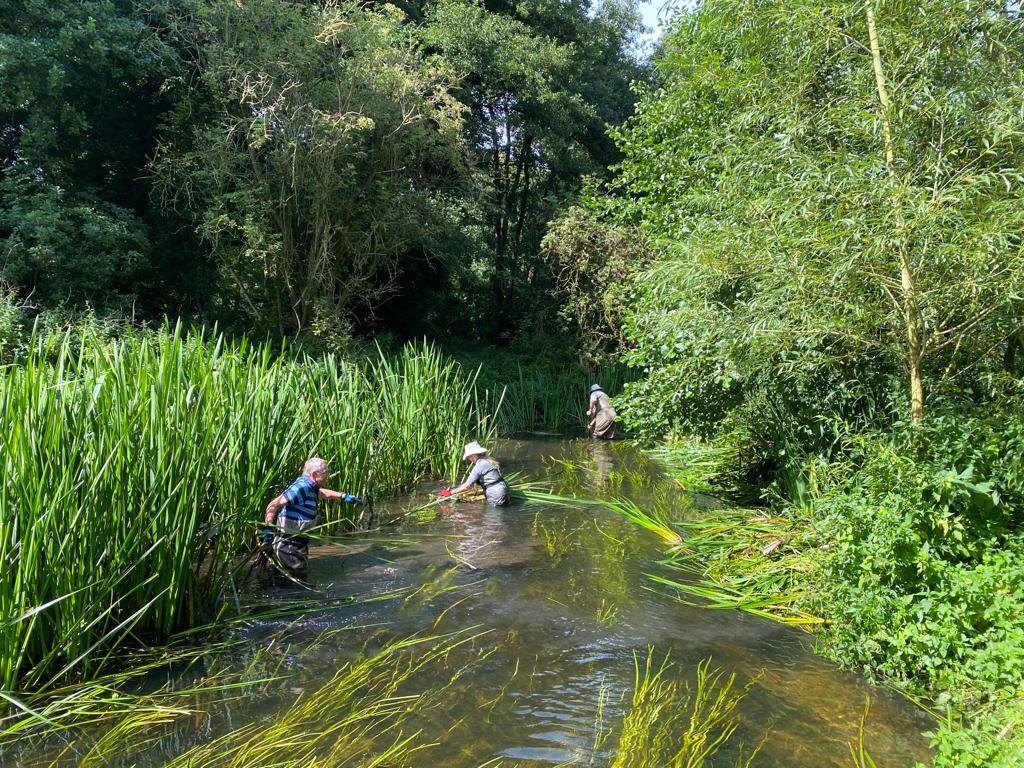
Bur reed, as it turns out, is present on our river as two species: unbranched bur reed, Sparganium emersum, colloquially, "Eel weed" which is friable and submerged or floating; and the delightfully named Sparganium erectum, branched bur reed, which stands tall. There is little to be done with the unbranched, submerged variety except to cut it with a scythe or hedge trimmer. The branched variety however, which presents a greater risk of water impoundment, can be removed complete with roots at an opportune time of year when it is weakening but short of the point where it just breaks off. That time is now (late August).
Rob Mongovan from the Wild Trout Trust, Kerry John, April and Alistair Phillips, put in a huge shift pulling up reeds.
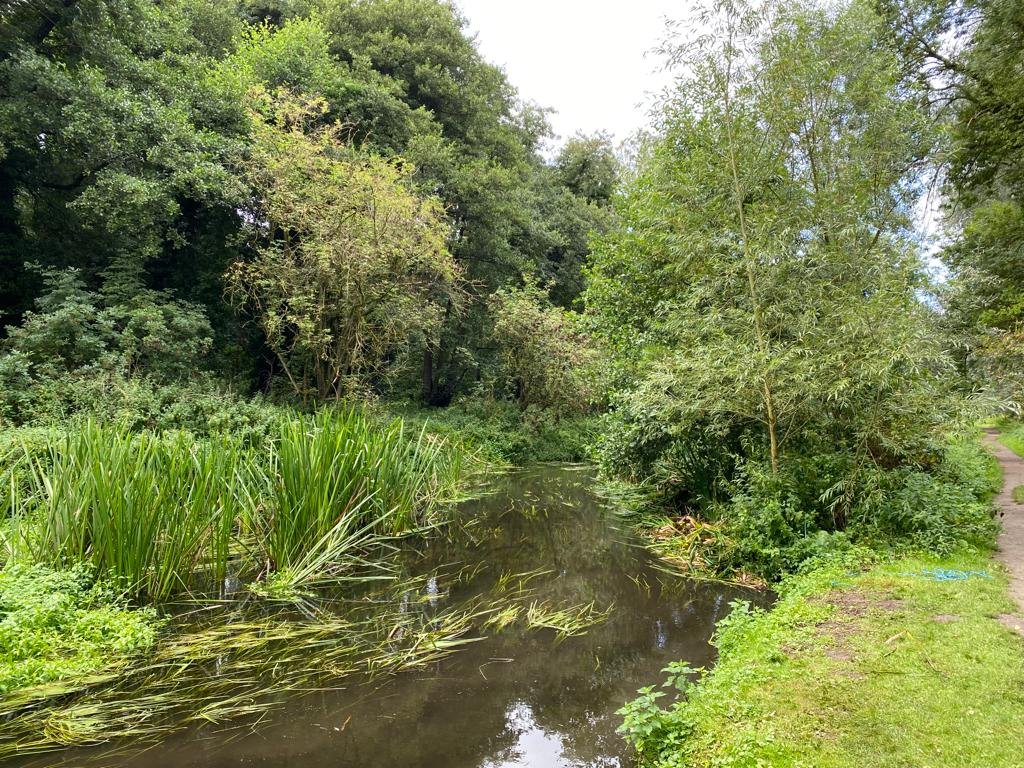
After, there was a 2m channel going downstream. Thanks to Nick Finch for the photos and for supervising.